

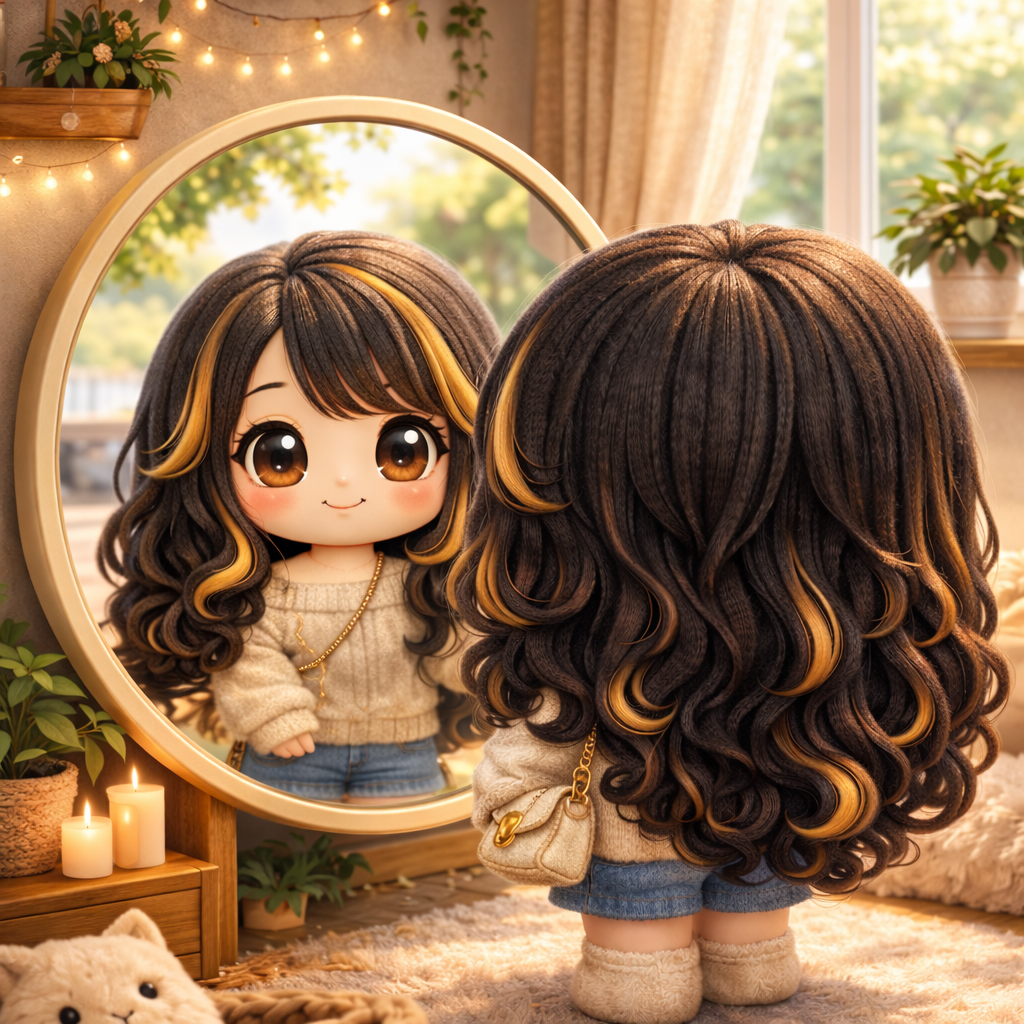
Disclaimer: We are not here to reflect on why you chose to open this blog post or why you did what you did back in 2020. Since you are here now, let’s take a moment to reflect on reflection.
What is reflection? It’s what makes you see yourself in the mirror every morning. It’s what makes the sky visible in the oceans and rivers. It’s how we see the moon and other planets. In other words, reflection makes the truth visible to us.
When light shines on an object, part of it gets absorbed. That absorbed light has two options: it can either transform into heat, or it can excite the object’s electrons. But nothing is stable in an excited state, like how you settle into your favorite sleeping position after a long day. So the electrons fall back to their ground state and release the light again. This absorbed light is the intrinsic color of the object, the color we don’t see from the outside.
For example, leaves absorb the red and blue parts of sunlight and use that energy to make food through photosynthesis. That’s why we don’t see red or blue in leaves. We see the green that’s left over. Except when it starts getting cold during fall. That’s when the plants stop prioritizing food making and the chlorophyll stops absorbing red and blue light. This lets the other pigments take the spotlight. Those pigments are what give us the yellow, red, and brown hues we see during fall.
Some of the light that shines on an object gets transmitted right through it, almost like it isn’t even there. Take glass for instance. If there is a clean glass door, you might not even notice it and end up walking straight into it. And yes, that would definitely make a viral video. But not all glass is that transparent. Some of it is only partly transparent, making the other side visible but hazy, and some types of glass have color preferences. They reflect or absorb certain colors of light but transmit others.
Now the remaining portion of light that is not absorbed by the object or allowed to transmit through it gets bounced off of it. This is called reflection. This is basically how we see an object that does not emit its own light. Reflection is what makes things visible. If an object does not reflect any of the light that shines on it, we simply cannot see it. This usually happens when there is no light available to reflect, like at night when we turn off the lights and there is no sunlight either. A perfect blackbody is something that doesn’t reflect any light at all, even in broad daylight. The closest we’ve come to that in real life is a material called Vantablack, which is made using a forest of tiny carbon nanotubes.
On the other hand, if all of the light that shines on an object is reflected by it, it becomes a mirror. It basically throws back every bit of light that hits it, creating an illusion of the real object for our eyes. We use these mirrors to see ourselves every morning, to see the vehicles behind us in cars and bikes, and even in telescopes and microscopes.
Sometimes we use multiple mirrors to see things we normally can’t. For instance, the hairdresser holds a mirror behind you while there’s a mirror in front of you, just so you can admire how beautiful she made your hair. You can even hold two mirrors parallel to make a periscope, a device through which you can see objects that aren’t directly visible. For example, submarines use periscopes to see above the surface of the water.
Reflection depends on angles. If it didn’t, you’d only ever be able to look straight into your own eye, which is a pretty terrifying thing to think about. In reality, a mirror sends back the light that hits it straight on and reflects the rest symmetrically on either side. That’s why your mirror image’s right hand ends up where the left hand should be. You can think of it like bouncing a ball. When you drop it straight down, it comes right back to your hand. But if you throw the ball at an angle, it bounces off farther away from you.
What happens when there are multiple mirrors next to each other? If they’re all at the exact same angle, they behave like one big mirror. But if there’s even a small angle between them, they start reflecting in different directions and can sometimes show multiple reflections. Now imagine having many tiny mirror surfaces placed next to each other on a ball. That would send light scattering in every direction, just like a disco ball.
So remember, when you shine light on all sides and look at every angle of a problem, it basically turns into a fun little disco ball.